Posted on August 14, 2026 by College of Sciences
#ThisIsWhatAScientistLooksLike

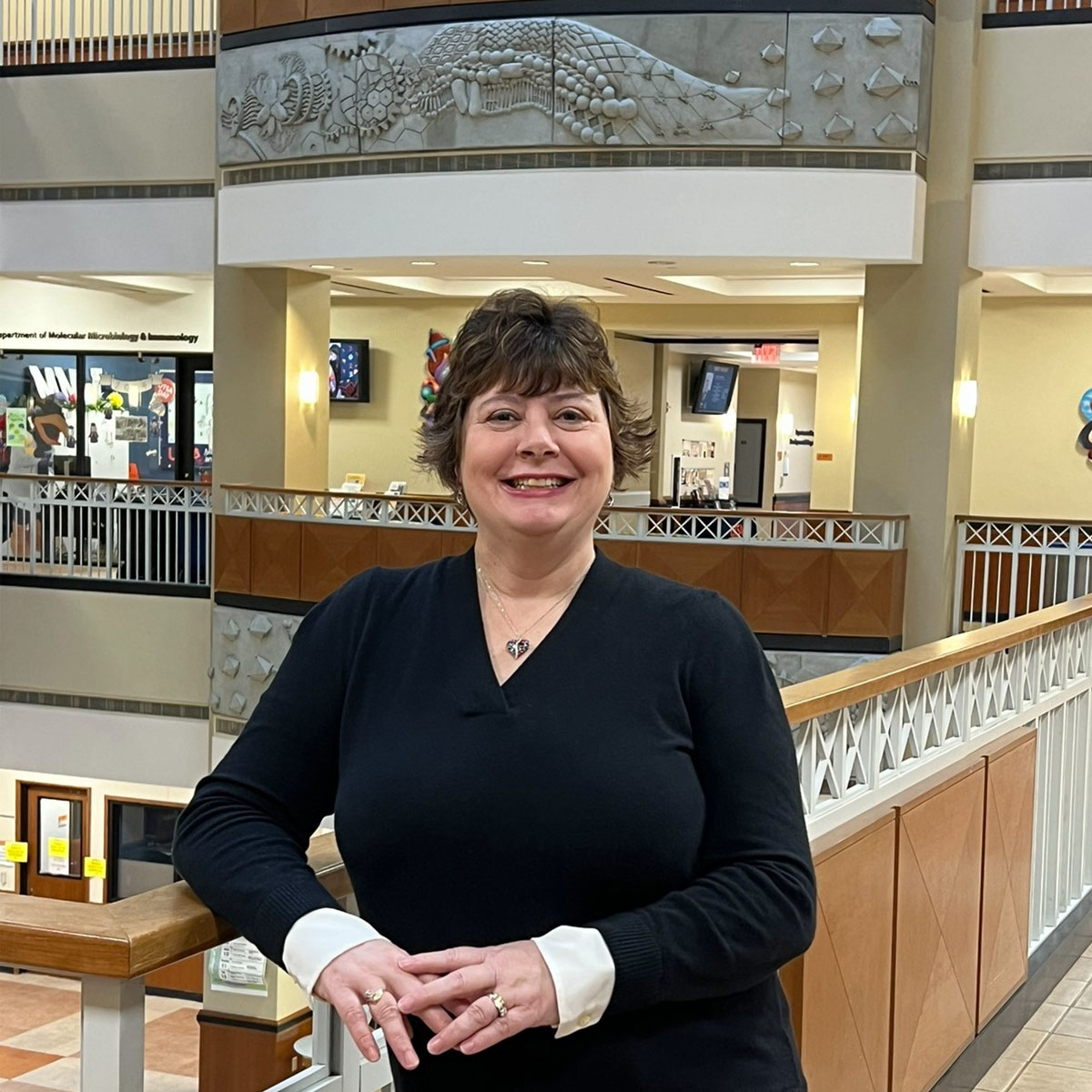
Whitney Ortiz, Molecular Microbiology and Immunology Ph.D. Student
By Christina Calvo
Big changes happen by examining some of the smallest parts of our universe: molecules and microbiology.
Whitney Ortiz's interest in immunology started as a high schooler in Los Fresnos, Texas. Whitney describes how incredible it is that something so small, like a virus, can be devastating when they infect people. Having obtained a Bachelor of Science in microbiology and a master's degree in aquatic resources from Texas State University, Whitney chose UT San Antonio to advance her education by earning a PhD in Molecular Microbiology and Immunology (MMI).
"I chose the PhD program at UT San Antonio because I enjoyed the environment and collaboration opportunities with Texas Biomed." Whitney said.
For Whitney, her passion for MMI is working towards finding treatments that help people improve their quality of life. Just as big changes begin with small parts, treatments for humans might even begin with smaller species, like fish. Whitney's research began with her exploring the gut microbiome of species that are not human.
"In my masters, I studied how pollutants in water impact the gut microbiome of different fish species," said Whitney. "This information is important for both conservation and aquaculture efforts and led to an interest in the role of gut microbiome health."
Whitney's research has not stopped at fish. Alongside Binhua "Julie" Ling, M.D., PhD, professor and program lead for host pathogen interactions at Texas Biomedical Research Institute, Whitney has been exploring how a person's brain and gut microbiome communicate with each other and directly affect the body.
"I am currently studying the relationship between the gut microbiome and the brain during HIV infection and methamphetamine exposure." Whitney said. "We are particularly interested in how inflammation in the brain from infection and drug use disorder may lead to neurological disorders."
One aspect of her education that Whitney notes is the importance of collaboration in the MMI field. Whitney believes that last year's merger with the UT Health Science Center has created numerous opportunities for connection and collaboration across many institutes.
"I think one of the best things about UT San Antonio is its collaboration with other facilities." said Whitney. "The effort that UT San Antonio puts into building and maintaining these relationships with other institutions shows a real and unique commitment to building the best future in science."
After she graduates in 2028, Whitney plans to become a postdoctoral researcher. Although the lab and location are yet to be determined, she hopes to keep studying HIV and eventually manage her own lab.
A microbe of wisdom that Whitney shared for future Roadrunners is to find a research lab and make connections. Just as scientists must collaborate, each research lab has its own workflow and characteristics. Learning more about research and getting experience in a lab is the best way to improve as a student and scientist.
"I would look not only at the research a principal investigator (PI) does, but the atmosphere and mentorship style a PI has. A mentor who matches your learning style is the best way to enjoy your experience and optimize your learning."
— College of Sciences
Explore the MMI Department!
Uniting an engaged community of researchers, educators, and students while preparing students for professional careers in microbiology and immunology, medical and public health service fields, education, research, and industry.
Recent MMI Spotlights
View More Spotlights