
Posted on June 5, 2026 by College of Sciences
#LeadershipSpotlight
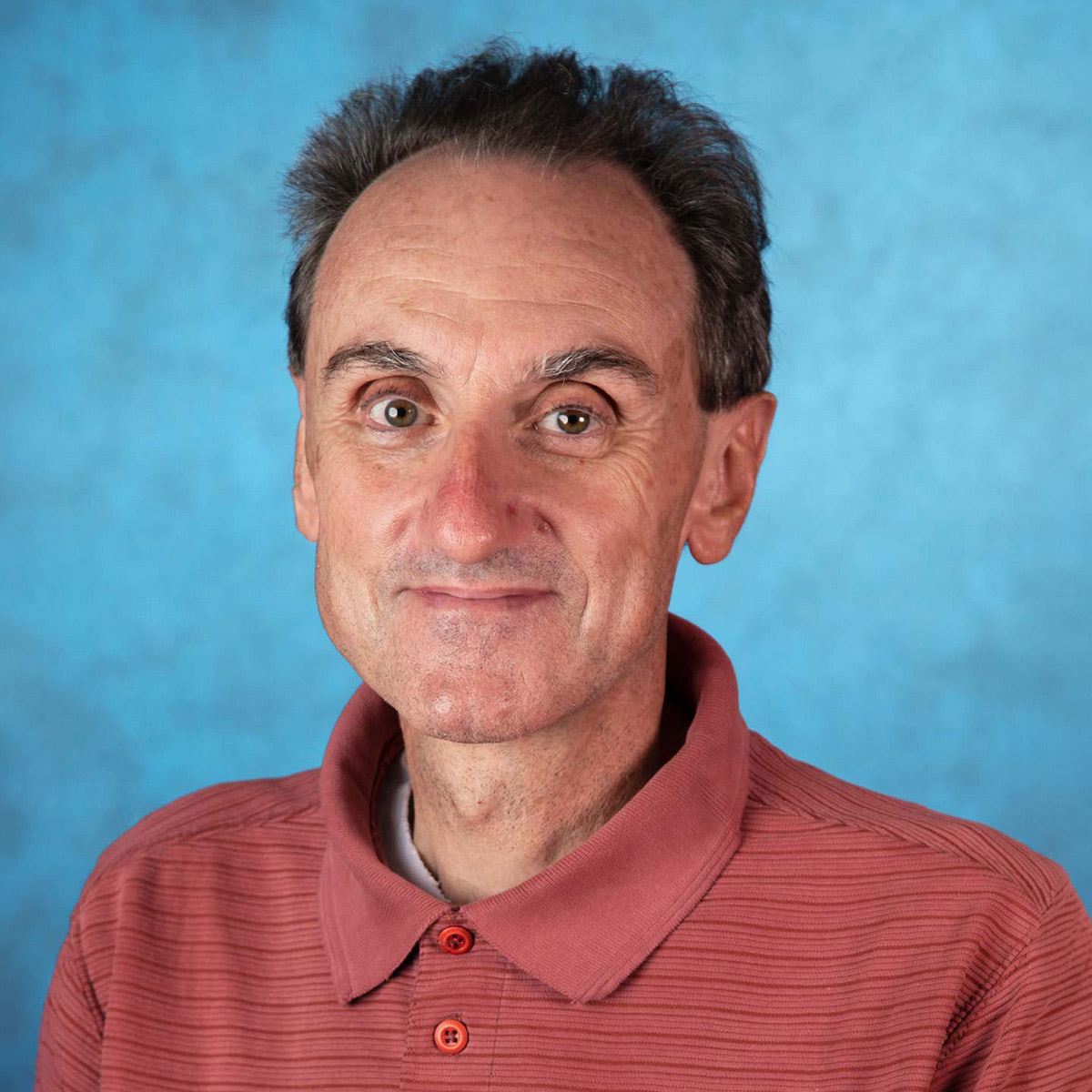
Lorenzo Brancaleon, Ph.D., Associate Dean for Graduate Studies, College of Sciences Office of the Dean
What did your journey to UT San Antonio look like?
My journey that led me to UT San Antonio was anything BUT linear and was full of unexpected events. Italian born and raised, my parents were from a generation who was basically denied the chance at higher education because of the devastation left by World War II and they poured their heart, soul and sweat to make sure that my generation did not have to suffer the same fate.
I earned my PhD in Physics at the Università degli studi di Parma. In a way my entire research career path can probably be tracked back to a fortuitous event one afternoon more than 30 years ago in an office of a Max Planck Institute in Mulheim (Germany). I will not go into the detail of the event but, as a result, I ended up at a NATO school which led to doing a portion of my doctoral research in Boston, which created a chance for a postdoctoral position in Canada, then back to Boston, then across the pond to Scotland and after one more hop across the Atlantic, to UT San Antonio. As a student and at every step of my career, including here at UT San Antonio, I was incredibly lucky to be guided by several truly life-transforming mentors.
What do you enjoy most about your area of study?
In my last year in high school, I started to be fascinated by the intersection between physics and biology, especially as it manifests at the molecular level. What interests me the most in general is the path to discovery and innovation as well as the opportunity to constantly challenge myself to answer research questions. But probably the most enjoyable part has been the mentors, the mentees, and the collaborators along the way.
What are some of the most notable research projects that you've been involved in?
I have been involved in many exciting research projects. 1) being involved in the early challenges of near-field scanning optical microscopy in soft-matter; 2) the discovery of an unexpected fluorescence behavior from short peptides and the formulation of a molecular model to explain it; 3) my current project where we are investigating the fundamental mechanism of engineered photoresponsive proteins.
What is your proudest moment with the College of Sciences?
If I had to select a single one, it is the creation of the Faculty Champions group during the COVID lockdown. What the College and Academic Innovation created was remarkable and transformative and when I spoke to colleagues at other places they wished their academic institutions had created something similar. I think that the fact that such a group was supposed to be a temporary emergency measure to help faculty to transition to an online environment and instead has become a fundamental feature of our college is testament to the commitment of the college to faculty and student success.
Describe your new leadership role and how it will help support students, faculty, and/or staff in COS.
I am proud and excited for this role. Graduate studies sit at the intersection between research, training, funding, academics. My role is to support and link these different facets in a way that aligns with the mission of the individual programs and the College. In this role I see myself as a champion for our COS graduate programs (faculty, students and staff) with the goal of helping the programs reach their goals.
What are you most looking forward to in this new role?
So many things. First, I am looking forward to learning about the needs and goals of the programs, and collaborate with all the stakeholders to create strategies to ensure that programs are models of cutting-edge research, and innovative student training.
Graduate programs in COS have the opportunity to shape the future generations of science and technology leaders and to be engines of economic mobility for the area. I would like to serve the College so that existing and new programs can be best positioned to meet this mission. Finally, the San Antonio region has a rich network of research institutions, and I would like the graduate programs to leverage such a network as a way to grow and impact the community.
What has been or do you anticipate being the most rewarding part of your work in this role?
It may sound weird but one very rewarding part of this position for me is to learn how the individual programs run and what are their challenges and aspirations. Particularly intriguing is also the fact that the graduate programs, especially in the sciences, are called to meet the challenges of preparing trainees for a rapidly evolving, highly-skilled workforce. I therefore anticipate that the most rewarding part of my work is going to be how I can serve the programs to meet such a challenge.
How would you spend your ideal Saturday?
I guess some combination of the following: an outdoor excursion or a sightseeing trip with my family, a relaxing conversation with family and/or friends, good food, watching a live sport event or, even better, playing a round of golf or attending a classical music concert.
What are your book recommendations?
Aside from Italian authors which most people here may not know, for fiction I liked Congo by Michael Crighton and Utz by Bruce Chatwin. But I do prefer non-fiction so my suggestion would be Enrico Fermi, Physicist by Emilio Segrè.
— College of Sciences
