
Posted on September 11, 2026 by College of Sciences
#LeadershipSpotlight
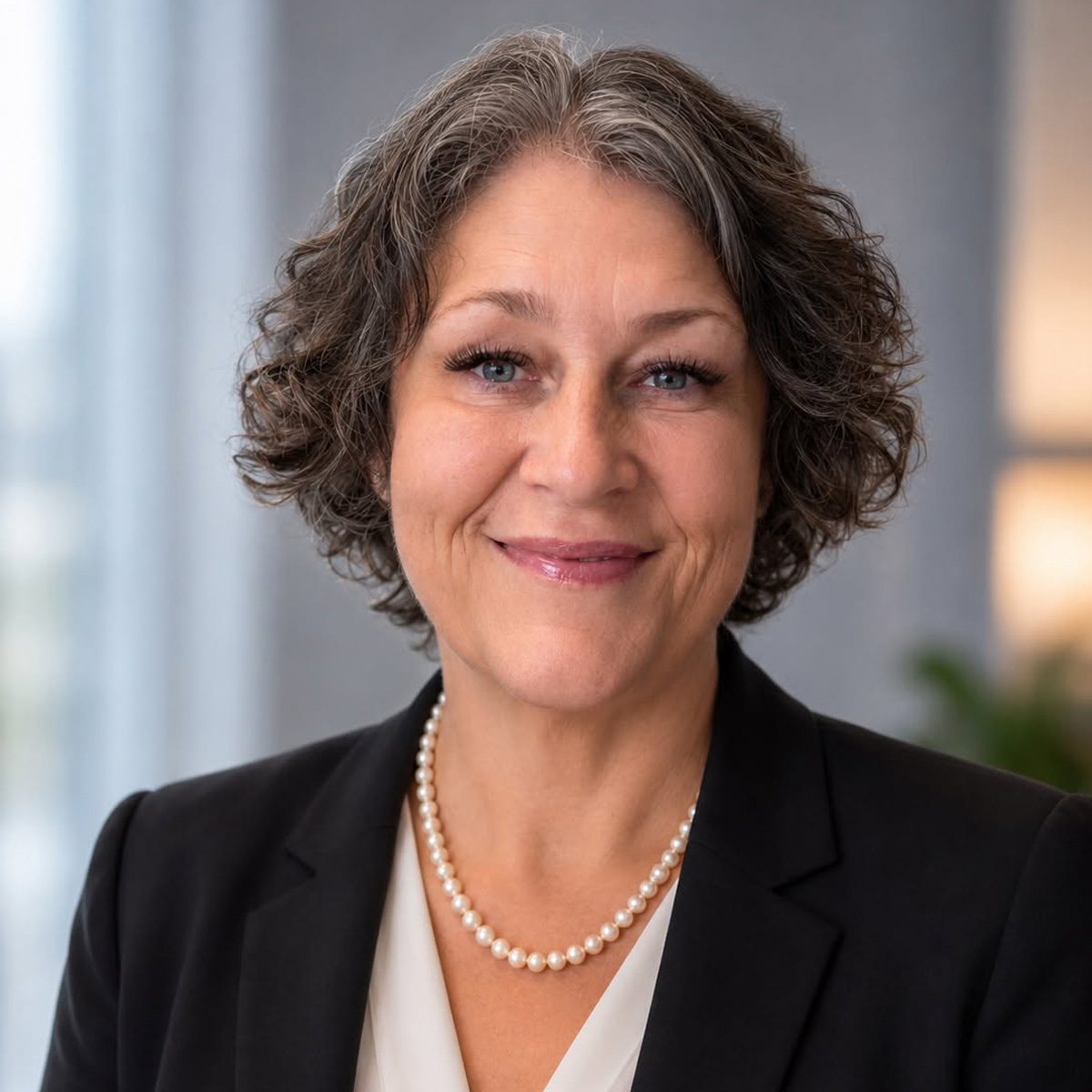
Katrin Gaardbo Kuhn, Ph.D., Chair of the Department of Biology, Health, and the Environment, College of Sciences Office of the Dean
What did your journey to UT San Antonio look like?
My journey to UT San Antonio has definitely not been a straight line; geographically or professionally!
I started out studying zoology in the UK, followed by medicine, then a master's degree in medical parasitology and a PhD in infectious disease epidemiology at the London School of Hygiene & Tropical Medicine. Then I returned to my native Denmark, where I spent many years at the Danish CDC working on infectious disease surveillance and investigating disease outbreaks, being a foodborne disease expert for European CDC and consulting for the World Health Organization. I also had the opportunity to lead One Health collaborations involving partners from 11 European countries, which taught me that some of the most interesting public health problems happen where disciplines, sectors, and countries collide.
In 2020, my family and I packed up our lives and crossed the Atlantic for Oklahoma. That move opened an entirely new chapter: academia, teaching, leadership, very hot summers, and big trucks! Somewhere along the way, sewage became a surprisingly large part of my professional identity. My work expanded from traditional infectious disease epidemiology into wastewater, emerging pathogens, climate, vector-borne diseases, and One Health.
And then in July 2026, the journey continued south to San Antonio. What attracted me to UT San Antonio was the opportunity to bring all those pieces together: international experience, public health, biology, the environment, One Health, education, and leadership, in a place with enormous potential for collaboration, growth, and impact. After moving from Denmark to Oklahoma and now Oklahoma to Texas, I have learned that sometimes the most interesting career paths require a few international moves, a willingness to try something completely new, and apparently a very high tolerance for moving boxes.
What do you enjoy most about your area of study?
Infectious diseases are never boring! They constantly transform; pathogens emerge, environments change, populations move, and suddenly a question we thought we understood becomes a completely new puzzle.
I especially love the detective work. Whether it is tracing the source of an outbreak, finding an unexpected pattern in surveillance data, or discovering that wastewater can tell us what is happening in a community before traditional surveillance does, there is always something to figure out. My career has taken me from collecting mosquitoes in Afghanistan and snails in Africa, investigating more than 100 foodborne outbreaks to studying wastewater in Oklahoma and researching how climate, animals, humans, and the environment influence disease.
That is also why I am so drawn to One Health. Some of the most interesting questions don't fit neatly into one discipline. They require epidemiologists, biologists, environmental scientists, veterinarians, data scientists, and communities to work together. And perhaps the best part is that the work has a very practical purpose. We are not just studying diseases because they are scientifically interesting; we are trying to detect problems earlier, understand why they happen, and ultimately use that knowledge to protect people's health. That combination of curiosity, problem-solving, collaboration, and real-world impact is what has kept me excited about this field for more than 20 years.
What are some of the most notable research projects that you've been involved in?
One of my most impactful projects is building Oklahoma's statewide wastewater surveillance program. What began during COVID-19 grew into a much broader system for monitoring respiratory, gastrointestinal, and even vector-borne diseases. Our team was among the first in the world to routinely use wastewater to look for gastrointestinal pathogens and the very first to successfully find West Nile Virus viral particles in wastewater!
I've also spent many years studying climate and infectious diseases and have investigated how climate change could influence malaria and Campylobacter infections in Europe. I've always been fascinated by the idea that changes in temperature, rainfall, flooding, and ecosystems can ultimately show up as changes in human disease.
And then there are outbreak investigations, epidemiology detective work. Some led to unexpected findings, including identifying environmental risk factors and even a previously un-discovered transmission route for Campylobacter.
What connects all these projects is something I really value: research that doesn't stop with a publication. I love science that can become surveillance, inform a public health decision, identify an outbreak earlier, or ultimately help a community. For me, that is when research becomes exciting.
What is your proudest moment with the College of Sciences or your previous institution?
One of my proudest accomplishments at the University of Oklahoma was building our wastewater surveillance program from scratch. It started during the pandemic, when wastewater surveillance was still a relatively new idea, and grew into one of the largest statewide programs in the country.
But what I'm proudest of isn't really the poop, it's the people. Our program brought together faculty, students, public health agencies, laboratories, engineers, and community partners who might otherwise never have worked together. Students became an integral part of the work, using real-world surveillance projects for their theses and capstones and seeing firsthand how something they learned in a classroom could influence public health practice. Seeing that program grow from an idea into a sustainable, multidisciplinary team, and watching students and early-career researchers grow along with it, has probably been my proudest moment. As I begin my next chapter with the College of Sciences at UT San Antonio, that is something I hope to recreate: bringing people from different disciplines together, giving students opportunities to work on real problems, and building something that has an impact well beyond the university.
Describe your new leadership role and how it will help support students, faculty and/or staff in COS.
As the new Chair of Biology, Health and the Environment, I see my role as leader, connector, and champion for the people in our department. BHE brings together a huge range of disciplines, and I'm excited about finding new ways to connect them. My own career has crossed a lot of boundaries, so I've seen firsthand that some of the best ideas happen when people who approach a problem differently start talking to each other.
For faculty and staff, that means listening, removing barriers where I can, supporting new ideas, and making sure people have opportunities to grow and succeed. Leadership is about building a team where people feel valued and have the resources and support to do their best work. Students are at the heart of that. I want our students to see BHE as the place where they can discover what excites them, participate in research, find mentors, and begin to imagine careers they may not even know exist yet. Ultimately, I hope my contribution to BHE and COS will create connections: between disciplines, between the university and the community, and between great ideas and the people who can make them happen. And if we can have some fun while doing all of that, even better.
What are you most looking forward to in this new role?
Getting to know the students, faculty, and staff who make up BHE, and figuring out what we can build together. I'm motivated about the possibilities that come from having so many different disciplines under one roof. My career has taught me that the most rewarding work doesn't stay neatly within disciplinary boundaries.
I'm also really looking forward to working with all our students: seeing them discover something they didn't know they were interested in; whether that happens in a classroom, through research, or because a mentor opened a door they hadn't considered. I want BHE to be a place where our students have lots of those moments.
On a personal level, I'm excited about being new again. I've moved between countries, institutions, and disciplines throughout my career, and every move has introduced me to fascinating people and new ways of thinking. Starting at UT San Antonio gives me another opportunity to learn, ask questions, bring some new ideas to the table, and hopefully help turn some of those ideas into successful opportunities for our students and faculty.
What has been or do you anticipate being the most rewarding part of your work in this role?
Seeing other people succeed has created the most memorable and proud moments in my career, especially when I've helped generate the opportunity that made it possible.
As Chair, I'll have the chance to support faculty as they develop new research ideas and collaborations, help staff grow and feel valued in their roles, and produce opportunities for students to become involved in research, mentoring, and experiences that can shape their careers.
Some of the moments I've enjoyed most in my career have been watching an idea grow into something much bigger: a student completing a project and realizing they want to pursue research, a new collaboration turning into a funded project, or a small team developing into a successful multidisciplinary program.
I hope there will be many moments like that at UT San Antonio. For me, the best part of leadership is not being able to say, "I did that." It's being able to look around and think, "Look what we did."
How would you spend your ideal Saturday?
My ideal Saturday would start slowly, with a strong resolution to not check emails—and then I would text our oldest son in Oklahoma and catch up with my sister in Denmark on FaceTime. There would be water involved: a pool, a lake, a river, or anywhere I can sit outside and relax.
I'd spend time with my family and our dog, do a little gardening, and probably have a conversation or two with the hummingbirds in the garden. They may not be particularly interested, but I enjoy talking to them anyway. I might also consider baking something Danish; like the kids' favorite "sausage horns."
Since moving to San Antonio, our weekends also involve exploring the city, grocery stores, and its food. I'm gradually training my Scandinavian constitution to cope with San Antonio levels of spice; a work in progress that I'm approaching with equal parts enthusiasm and caution!
What are your book recommendations?
I'm a big fan of Stephen King and Noah Gordon books, equally. The Physician by Noah Gordon is my comfort book that I always read if I'm having a rough time in life. If you like historical medical fiction, run to the bookstore or your Amazon basket now and get this book. I literally read one copy to pieces (not even kidding!)
My favorite Stephen King book is The Stand—for obvious infectious disease epidemiology reasons and the way he describes people, personalities, and situations.
— College of Sciences
