Posted on May 1, 2026 by College of Sciences
#FacultySpotlight
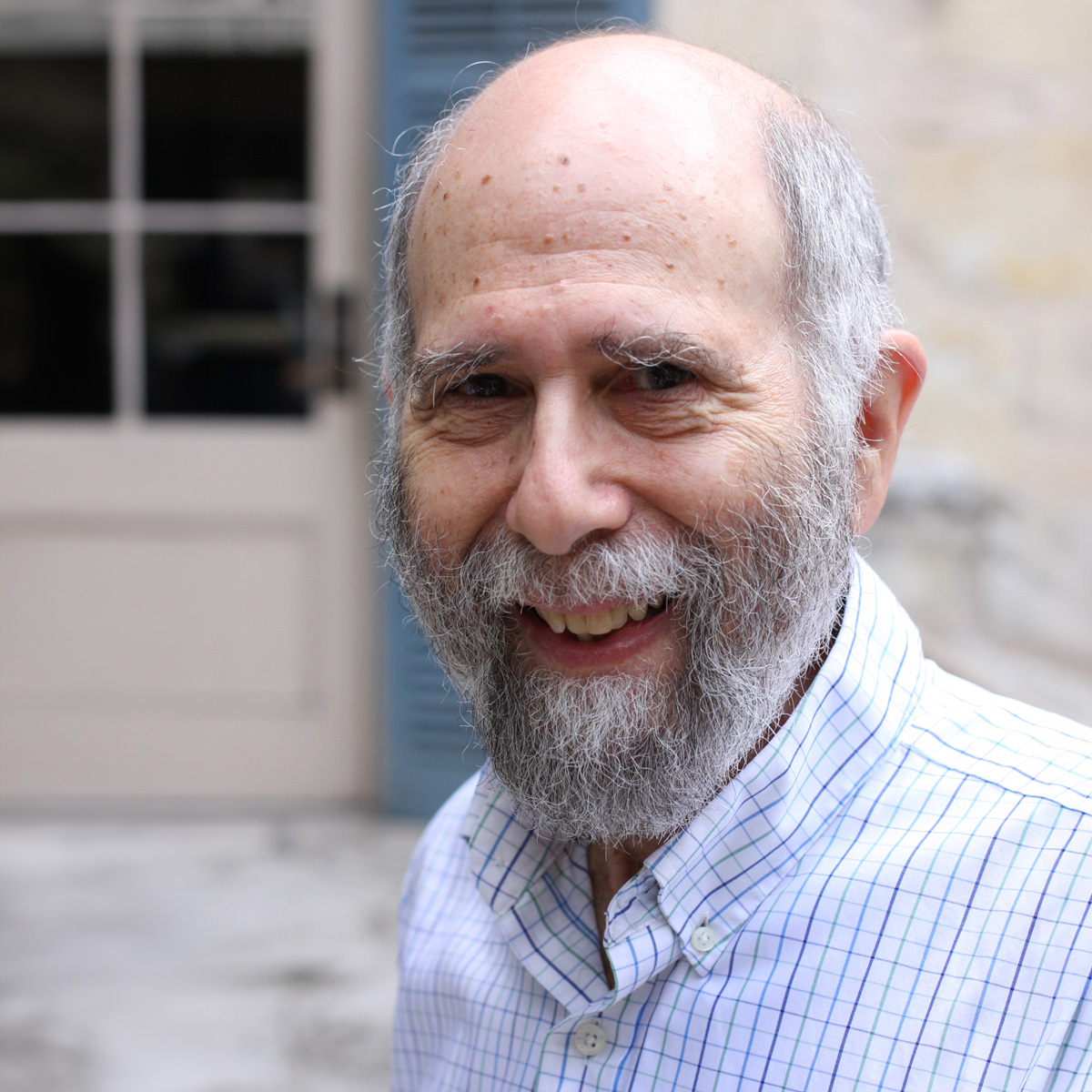
Robert Renthal, Ph.D., Department of Neuroscience, Developmental and Regenerative Biology
Robert Renthal, professor of Neuroscience, Developmental and Regenerative Biology, was recently recognized on Tuesday, April 28 at the 2026 University Excellence Awards for the 50 years of service award at the University of Texas at San Antonio.
What did your journey to UT San Antonio look like and are you fixed-term track or tenure track?
In 1975, The University of Texas at San Antonio hired me as a biophysical chemist to join the Division of Earth and Physical Sciences, which had five other chemists, two geologists, and a physicist.
What do you enjoy most about your area of study?
I once saw a physical chemistry textbook preface in which the author wrote that his subject "is the study of everything that is interesting in science." More or less, that describes my area of study. My enjoyment of science is indiscriminate.
What are some of the most notable research projects that you've been involved in?
When I came to San Antonio, my research aimed to discover the molecular mechanism of a light-activated membrane ion channel. Many labs around the world worked on this, and by 1990 it was mostly solved. The results, years later, stimulated the development of optogenetics, a powerful neuroscience tool.
I did a sabbatical at UT Health on electron microscopy of photoreceptor cells. For one set of experiments, I collected bovine retinas from a specialty slaughterhouse in Seguin. Because the tissue had to be chemically stabilized immediately, I dissected the retinas in the slaughterhouse, splashing a lot of blood on my lab coat. In those days, there was a notorious speed trap on IH10 between Seguin and San Antonio, and as I returned to the lab, I tried to imagine how I would explain to the arresting officer why I was covered with blood and had ice buckets of cow parts in the back seat. Fortunately, I wasn't arrested, and we published the first evidence of a specialized isoform of tubulin in cilia.
I later attended a conference on this topic, where I heard a talk that piqued my interest in insect olfactory receptors. I thought it would be simple, so I started doing research on chemical signaling by fire ants. It wasn't simple, and I realized that I needed a more biology-oriented research environment, so in 1998 I moved to the Division of Life Sciences, which soon became the Department of Biology. We discovered secretory glands in fire ant antennas, first noticed on our electron micrographs by an undergraduate researcher in my lab. We also measured the first proteome of the fire ant antenna, resulting in our identification of a new chemosensory protein. This work led me to a collaboration with the USDA Agricultural Research Service in Kerrville, working on new research projects involving biting flies and ticks.
During the Covid 19 pandemic, the super-sized Department of Biology underwent mitosis, splitting into three parts. My tick research seemed to belong in MMI, and my ant chemical ecology work seemed to be part of Integrative Biology (now Biology, Health and the Environment), but it was the insect olfactory neurons that lured me into NDRB. That same year, two amazing discoveries caught my attention, and my research has shifted in a new direction. First, AI methods of accurately predicting protein 3D structures were reported. Second, the molecular structure of an insect olfactory receptor was revealed. I'm now trying to trace the path taken by volatile chemicals as they pass from the air into an insect antenna and then onto the olfactory receptor in the neural cell membrane. This work requires a mixture of chemistry, physics and biology, and I hope it will keep me busy for a while, until the next interesting topic comes along.
What is your proudest moment with the COS?
When The University of Texas at San Antonio opened, there was a large pool of talent in South Texas constrained by insufficient access to higher education opportunities. I'm proud of the impact we've had on this community over the past 50 years.
What do you enjoy most about your job?
Teaching science, and doing scientific research, is similar in many ways to the performing arts, or athletic competition.
How would you spend your ideal Saturday?
My ideal Saturday would be spent hiking in the forest.
What are your book recommendations?
Beyond Sleep, by Willem Hermanns: a novel about the experiences of a graduate student trying to do field work.
Below the Edge of Darkness, by Edith Widder: a marine scientist's memoir, and maybe the best popular science book ever written.
Tuxedo Park, by Jennet Conant: how a radar prototype was smuggled out of Britain to a private lab, where university physicists developed this key World War II technology.
— College of Sciences
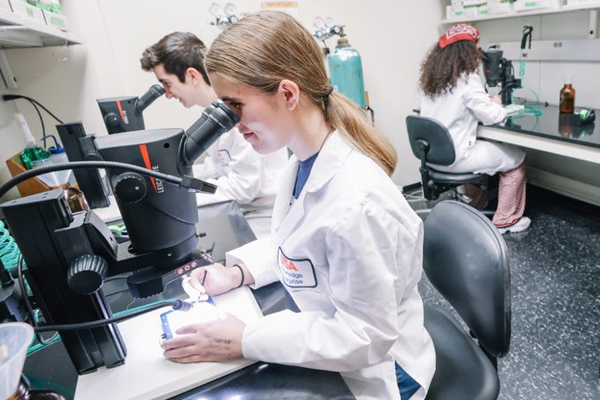
Explore the NDRB Department!
Conducting high-impact, internationally recognized research in the areas of neuroscience and developmental and regenerative biology while educating and training the next generation of leaders in biological sciences.
Recent NDRB Spotlights
View More Spotlights