College of Sciences Research Symposium
Showcasing the Science Shaping Tomorrow
April 10, 2026
Main Campus | 8 am–5 pm
Download COS Research Symposium Program Book
This symposium will celebrate who we are as a research community. Our goal is to create a meaningful experience that highlights the depth of our work, the distinctive identity of our scholars, and the spirit of collaboration that strengthens our college.
Join us to learn about faculty, staff, and student research from all COS departments. Connect and share ideas.
Please register if you wish to:
- attend
- present (poster, oral, or 3-minute thesis)
- participate as a Poster Judge, Session Chair, or Day-of-Volunteer
Registration and abstract submission deadline: March 16, 2026
COS Research Symposium Presentation Tracks
Biomedical and Health Sciences
Research spanning molecular, cellular, organismal, ecological, and population biology, including neuroscience, immunology, infectious disease, cardiovascular research, translational science, and interdisciplinary health innovation.
Molecular, Chemical, and Materials Discovery
Chemistry and materials research including synthesis, catalysis, nanomaterials, spectroscopy, chemical biology, and energy-relevant materials.
Fundamental and Applied Physical & Mathematical Sciences
Physics, applied mathematics, modeling, quantum and nanoscale phenomena, astrophysics, simulation, and data-driven quantitative research.
Earth, Environment, and Planetary Systems
Geoscience, climate, hydrology, ecology, conservation biology, wildlife and fisheries science, environmental systems, and planetary research.
STEM Education and Workforce Development
Research and innovation in STEM education, experiential learning, workforce pipelines, industry engagement, and student success initiatives.
COS Research Symposium Schedule
View a map of the Student Union (SU) and HEB Student Union (HSU) for room locations.
| Time |
Activity |
Location |
| 8:00 am–4:00 pm |
Registration Desk and Check In Open |
HSU Ballroom Galleria |
| 8:00 am–4:00 pm |
Expo Hall and Poster Hall Open |
Convocation Center |
| 8:00 am–8:45 am |
Graduate Student Appreciation Breakfast |
HSU Ballroom 1 |
| 9:00 am–9:15 am |
Introductory Remarks
President Taylor Eighmy, Dr. Jennifer Sharpe Potter, and COS Dean Stephanie Santorico |
HSU Ballroom 2 |
| 9:15 am–10:00 am |
Plenary Speaker
Dr. Christopher Glein
"Life Beyond Earth: The Opportunity Right Down the Road" |
HSU Ballroom 2 |
| 10:00 am–10:20 am |
Transition and Coffee |
HSU Ballroom Galleria |
| 10:20 am–12:30 pm |
3-Minute Thesis Competition |
HSU Ballroom 2 |
| 10:20 am–12:30 pm |
Oral Presentation Sessions |
▻ Biomedical and Health Sciences
| Time |
Presenter |
| 10:20 |
Alexey Soshnev, Assistant Professor, Neuroscience, Developmental and Regenerative Biology
"Making sense of missense: Discovering new biology through histone mutation landscape" |
| 10:45 |
Megan Kempher, Assistant Professor, Molecular Microbiology and Immunology
"Impact of a sequence invariable region on conformation, secretion, and neutralization of the Clostridioides difficile toxin TcdB" |
| 11:10 |
Lacy Barton, Assistant Professor, Neuroscience, Developmental and Regenerative Biology
"Guiding the next generation: Genetic and non-genetic factors that support and compromise germline development" |
| 11:35 |
Break |
| 11:40 |
Wenicios Ferreira Chaves, Postdoctoral Associate, Neuroscience, Developmental and Regenerative Biology
"Serotonin modulates neuropeptide Y neurons in the inferior colliculus by activation of 5-HT2A and 5-HT2C receptors" |
| 12:05 |
Jesús Romo, Assistant Professor, Molecular Microbiology and Immunology
"Clostridioides difficile interacts with fungal colonizers of the gastrointestinal tract" |
|
HSU Harris Room |
▻ Molecular, Chemical, and Materials Discovery
| Time |
Presenter |
| 10:25 |
Philipp Schmidpeter, Assistant Professor, Chemistry
"Concentration-dependent dual functionality of specific lipids on ion channel activity" |
| 10:50 |
Zoe Hoffpauir, Postdoctoral Associate, Chemistry
"Journey to the center of the capsid" |
| 11:15 |
Syed Usama, Assistant Professor, Chemistry
"Strategies to access fluorophores for biomedical research" |
| 11:40 |
Patrick Warren, Assistant Professor of Research, Physics and Astronomy
"From oxidation kinetics to nanoscale microstructure: Integrated characterization at EEML and KAMC" |
| 12:05 |
Kade Johnson, Doctoral Student, Physics and Astronomy
"Surface plasmon propagation in silver nanowires under high pressure" |
|
HSU Travis Room |
▻ Fundamental and Applied Physical & Mathematical Sciences
| Time |
Presenter |
| 10:20 |
Jose Morales Escalante, Assistant Professor, Mathematics
"Quantum Stochastic Gradient descent in continuous-time limit via the Wigner formulation of open quantum systems" |
| 10:40 |
David Gonzalez Alcantara, Postdoctoral Associate, Physics and Astronomy
"Calculation of the properties of ZrN cubic nanocrystals containing Mo and Pd as fission products" |
| 11:00 |
Xóchitl López-Lozano, Associate Professor, Physics and Astronomy
"Symmetry at the nanoscale and its consequences on the properties of nanostructures" |
| 11:20 |
Break |
| 11:30 |
Mira Khair, Postdoctoral Associate, Physics and Astronomy
"Fabrication and characterization of advanced fuels and surrogates using arc-melt for next-generation reactor application" |
| 11:50 |
Thayne Currie, Associate Professor, Physics and Astronomy
"Directly imaging extrasolar planets around accelerating stars" |
| 12:10 |
Juan Gutiérrez, Professor, Mathematics
"A mathematical theory of discursive networks: Mutual accountability as the architecture of reliable AI" |
|
SU Pecan Room |
▻ Earth, Environment, and Planetary Systems
| Time |
Presenter |
| 10:20 |
Welcome / Opening remarks |
| 10:25 |
Chris Packham, Professor, Physics and Astronomy
"The Habitable Worlds Observatory" |
| 10:40 |
Mona El Morsy, Postdoctoral Associate, Physics and Astronomy
"Starlight suppression with photonic integrated circuits: Laboratory characterization and future applications for Subaru/GLINT and HWO" |
| 10:55 |
Kaushik Mitra, Assistant Professor, Earth and Planetary Sciences
"Redox sensitive elements on Mars: Implications for surface geochemistry and astrobiology" |
| 11:10 |
Krishna Kumari, Postdoctoral Fellow, Earth and Planetary Sciences
"Understanding the role of Martian oxyhalogens in organic matter degradation: Preservation of potential biosignatures" |
| 11:25 |
Yongli Gao, Professor, Earth and Planetary Sciences
"Hydrocarbon formation and transformation from the archean to modern environments: Insights from isotope geochemistry and quantum chemistry" |
| 11:40 |
Elizabeth Bailey, Assistant Professor, Earth and Planetary Sciences
"New perspectives on the geochemical fate of organic carbon in Earth's history" |
| 11:55 |
Alan Whittington, Professor, Earth and Planetary Sciences
"Using calorimetry to quantify disorder in materials from the Earth to the Moon to the stars" |
|
HSU Bexar Room |
▻ STEM Education and Workforce Development
| Time |
Presenter |
| 10:20 |
Priya Prasad, Associate Professor, Mathematics
"Structuring PLCs for college-level instructional change" |
| 10:40 |
Benjamin Sencindiver, Assistant Professor, Mathematics
"How calculus students make sense of graphs—and how their understanding evolves" |
| 11:00 |
Jessica Gehrtz, Assistant Professor, Mathematics
"Leveraging student thinking: Taking active learning to the next level" |
| 11:20 |
Marissa Martinez, Master’s Student, Mathematics
"How do Latina STEM majors feel in their calculus courses and what helps them feel supported?" |
| 11:40 |
Blain Mamiya, Associate Professor of Instruction, Chemistry
"We should embrace mistakes in the classroom" |
| 12:00 |
Hadi Arman, Associate Professor of Practice, Chemistry
"Fact or fiction—systematic investigation on the use of AI (or external aids) for online homework" |
|
SU Mesquite Room |
| 12:30 pm–2:30 pm |
Poster Presentations and Judging
Lunch provided for volunteers and participants |
Convocation Center |
| 2:30 pm–4:00 pm |
Oral Presentation Sessions |
▻ Biomedical and Health Sciences
| Time |
Presenter |
| 2:30 |
Melanie Carless, Professor, Neuroscience, Developmental and Regenerative Biology
"Evaluating baboons as a preclinical model of genetic generalized epilepsies" |
| 2:55 |
Won-Haeng Lee, Postdoctoral Associate, Neuroscience, Developmental and Regenerative Biology
"The regulation and the role of PKCθ in the pathogenesis of Alzheimer's disease" |
| 3:20 |
Luan Vu, Assistant Professor, Molecular Microbiology and Immunology
"Asthma susceptibility driven by epigenetic and metabolic reprogramming of RSV-trained ILC2s" |
| 3:35 |
Networking roundtable |
|
HSU Ballroom 2 |
▻ Molecular, Chemical, and Materials Discovery
| Time |
Presenter |
| 2:30 |
Andrey Chabanov, Professor, Physics and Astronomy
"Novel gyromagnetic metamaterials for nonreciprocal electromagnetics" |
| 2:50 |
Kevin Knebel, Doctoral Student, Physics and Astronomy
"Photon management in Si solar cells via CuInS2 quantum dot coatings" |
| 3:10 |
Maksym Pavlenko, Doctoral Student, Chemistry
"Divergent strategies in enantioselective and regioselective reactions" |
| 3:30 |
Sachchida Nan, Postdoctoral Associate, Chemistry
"Cyclic sulfone ring remodeling enables molecular shape diversity-oriented synthesis of privileged biaryl and oligoaryl motifs" |
|
HSU Travis Room |
▻ Fundamental and Applied Physical & Mathematical Sciences
| Time |
Presenter |
| 2:30 |
Lulu Zhang, Postdoctoral Associate, Physics and Astronomy
"Feedback signatures and implications for the central engine of active galactic nuclei from JWST spectroscopy" |
| 2:50 |
Zhuolin Qu, Assistant Professor, Mathematics
"Density-mediated emergence impacts the success of Wolbachia-based mosquito population reduction strategies" |
| 3:10 |
Break |
| 3:20 |
Carlos Bassetto, Assistant Professor, Physics and Astronomy
"Using photolipids to promote neuronal excitability and study ion channel mechanosensation" |
| 3:40 |
Henry Chimal-Dzul, Assistant Professor, Mathematics
"How does LESS, a post-quantum digital signature, work?" |
|
SU Pecan Room |
▻ Earth, Environment, and Planetary Systems
| Time |
Presenter |
| 2:30 |
Collaboration building and proposal development workshop |
|
HSU Bexar Room |
| 2:30 pm–4:00 pm |
Poster Judging and Score Entry Hub |
SU Mesquite Room |
| 4:00 pm–4:20 pm |
Transition and Coffee |
HSU Ballroom Galleria |
| 4:20 pm–5:00 pm |
Awards and Closing Remarks |
HSU Ballroom 2 |
COS Research Symnposium Plenary Speaker
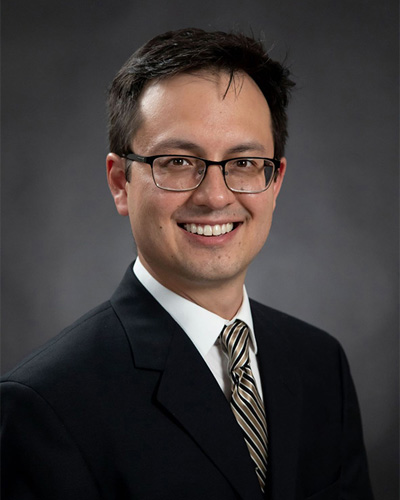
Dr. Christopher Glein, Principal Scientist, Southwest Research Institute
"Life Beyond Earth: The Opportunity Right Down the Road"
Join us for the adventure of a lifetime as we revisit Cassini's exploration of Saturn's moon Enceladus. We will consider whether this small but surprising moon can support life. We will then look to the future of the search for life on our solar system's ocean worlds and explore the scientific and technological opportunities that await.
Dr. Christopher Glein is a planetary scientist at Southwest Research Institute whose research revolves around the "big three" icy ocean worlds—Enceladus, Europa, and Titan. Glein is an expert on the geochemistry of these moons. He develops thermodynamic models for inferring the geochemical properties of their environments and the processes that shape them. He co-led a landmark 2017 Science paper reporting the discovery of molecular hydrogen in Enceladus's ocean, establishing a quantitative basis for energetic habitability in an extraterrestrial ocean for the first time. His research program also includes exoplanets, both those that could be habitable as well as those that reveal how geochemistry operates across diverse planetary environments. Glein was a member of the instrument team for the Cassini Ion and Neutral Mass Spectrometer, and he is a Co-Investigator on the Europa Clipper MAss Spectrometer for Planetary EXploration team. In addition, he is the Principal Investigator of a James Webb Space Telescope observing program on Enceladus. Glein served on the most recent Decadal Survey for Planetary Science and Astrobiology for the National Academies of Sciences, Engineering, and Medicine. He recently gave the Carl Sagan Lecture at the 2025 AGU Fall Meeting. Glein earned a PhD in 2012 from Arizona State University, where he studied with Everett Shock.